ONLINE CASINO SCAMS The Independent UK Watchdog
The Complaints Ladder

How to complain about an online casino in the UK

A casino complaint in Great Britain follows a defined ladder: the operator first, then an independent ADR provider, then the Gambling Commission — and each rung does a different job. There is no single statutory "gambling ombudsman" the way some markets have; that role is filled by the ADR providers a licensed operator must name. This guide explains what each layer can and can't do, answers the ombudsman question head-on, walks through every stage, and gives you example wording you can adapt at each step.

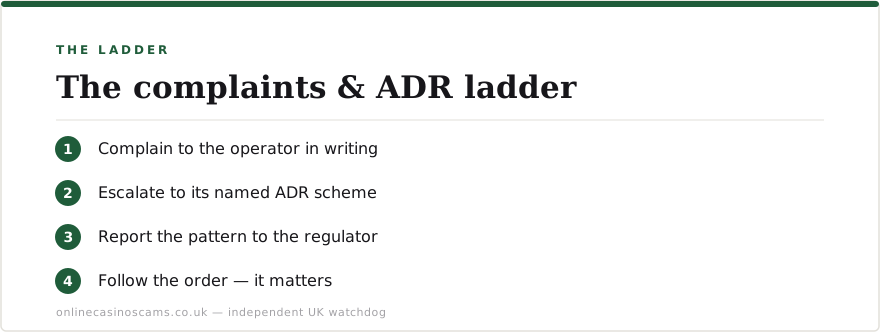
The complaints & ADR ladder: Complain to the operator in writing; Escalate to its named ADR scheme; Report the pattern to the regulator; Follow the order — it matters.
Section 01 / The Ladder

Three rungs, three different jobs

The complaints process for a licensed UK casino runs in a fixed order, and each layer has a specific, limited power. Knowing which layer does what saves you from sending the right message to the wrong place.

  • The operator handles your complaint first and is the only party that can directly settle it — credit your account, release a withdrawal, or refuse with a reason. Every formal route starts here.
  • The ADR provider (alternative dispute resolution) is the independent adjudicator the operator must name. If you and the operator deadlock, ADR reviews the evidence free of charge and reaches a decision that can bind the operator up to the scheme's limits.
  • The Gambling Commission regulates the operator's licence. This is the rung most often misunderstood: the Commission can investigate, build an enforcement record, and review or sanction a licence — but it does not adjudicate individual disputes and does not order an operator to refund an individual player. It regulates the industry; it doesn't run your case.

So the practical shape is: the operator can pay you, ADR can decide whether the operator should pay you, and the Commission can act against the operator's licence based on patterns of behaviour. Aim each step at the rung that can actually do what you need.

Section 02 / Stage One

Complaining to the operator, properly

Stage one is non-optional: ADR will not look at a case that hasn't been through the operator's own complaints process first. Do it in writing, through the official complaints channel named in the casino's terms or help pages — not a throwaway line in live chat that leaves no record.

Include everything that turns "I'm unhappy" into "here is a documented dispute":

  • Your account details and the dates involved.
  • The exact amounts — deposits, the withdrawal requested, any bonus in play.
  • Screenshots: balances, transaction history, chat logs, and the relevant terms as they read at the time.
  • A clear statement of what you want — the withdrawal paid, the balance restored, the decision reversed.

Then ask, explicitly, for the operator's final response — often called a "deadlock letter." That document is your key to the next rung: ADR generally needs either a final response or confirmation that the operator's complaint timeframe has elapsed. That timeframe is commonly stated as eight weeks under the standard expected of operators that offer ADR, but check the figure in the casino's own terms rather than assuming it. If the operator goes silent or the window passes without resolution, you're entitled to escalate.

Section 03 / Stage Two — and the Ombudsman Question

ADR: the independent adjudicator

Alternative dispute resolution is an independent body that reviews gambling disputes once they've deadlocked with the operator. It's free to the player. Every licensed operator must name the ADR provider it uses — you'll find it in the terms and conditions or a dedicated complaints page. IBAS and eCOGRA are among the well-known ADR providers operating in this space; the one that matters for your case is the one your specific casino has named.

You submit the same evidence you built in stage one, plus the operator's final response. ADR weighs both sides against the operator's terms and the rules of the scheme, and reaches a decision. Within the scheme's limits, that decision can bind the operator — meaning a casino that signed up to the scheme is required to honour an adjudication in your favour up to the scheme's cap. ADR is not a court and won't award unlimited sums, but for the great majority of player disputes it's the layer with real, usable teeth.

Is there a gambling ombudsman in the UK?

This is one of the most-searched questions on the topic, and the honest answer is precise: as of our last review, there is no single statutory "gambling ombudsman" in Great Britain in the way there is for, say, financial services. The function people imagine when they say "ombudsman" — independent, free, binding dispute resolution — is delivered through the ADR providers every licensed operator must name. A dedicated gambling ombudsman has been discussed in UK gambling-reform debates, but you should check the current position rather than assume one is operating. In the meantime, the named ADR scheme is the route that exists today.

Section 04 / Stage Three

Reporting to the Gambling Commission

The Commission is the rung that confuses people most, so be clear about what reporting achieves. It will not get your individual money back — the regulator does not adjudicate individual disputes or order refunds in single cases. What it does is build the enforcement record: reports feed into the intelligence the Commission uses to open investigations, review licences and impose penalties on operators whose conduct crosses the line.

That record is not abstract. Substantial penalties documented on our register began as patterns of exactly this kind of complaint. The £1m UKGC fine against ProgressPlay Limited in July 2025, noted in our file on Monster Casino, and the roughly £1.4m regulatory settlement reached with AG Communications Limited in February 2025, noted in our file on Prime Casino, are both examples of regulator action against operators with documented failings. We attribute these to the Commission's own published enforcement notices, not to any conclusion of our own beyond the public record. Your complaint is a data point in that machinery, even when it can't reverse your individual loss.

The Commission is also the place to report a site operating without a UK licence — unlicensed operation is a matter for the regulator and, for losses, for Action Fraud.

Section 05 / When There's No Ladder

When the casino is unlicensed: no ADR, no rungs

The entire ladder above exists because of the licence. Remove the licence and the rungs vanish: an unlicensed site names no ADR provider you can escalate to, and the Gambling Commission has no licence to review or sanction. The complaints process you'd want simply isn't there.

What's left is a different toolkit. The most effective route is usually a card chargeback through your bank — the dispute rights attached to card payments, and the single biggest reason rogue sites push you towards crypto, which removes them. Alongside that, report the operator and any losses to Action Fraud. Both routes, and exactly when a chargeback works, are covered in getting your money back. The lesson worth carrying back to stage zero: confirm the licence before you deposit, because the ladder you're reading about only exists for licensed sites. The licence check is how you make sure it'll be there if you need it.

Section 06 / What to Say

Example wording for each stage

These are skeletons to adapt, not scripts to copy blindly — fill in your own dates, amounts and account details. Keep every message factual, dated and unemotional; records win disputes.

To the operator (stage one)

"I am making a formal complaint about a withdrawal of £120 requested on 3 March, which remains unpaid after repeated processing delays. My account is fully verified and the funds are not subject to any active bonus. I have attached screenshots of my balance, transaction history and our chat logs. Please treat this as a formal complaint and provide your final response, including a deadlock letter if the matter cannot be resolved."

To the ADR provider (stage two)

"I am escalating a deadlocked dispute with the operator after receiving its final response, attached. The dispute concerns an unpaid, fully verified withdrawal of £120. I have enclosed my complaint to the operator, its final response, and supporting screenshots of my balance and transaction history. I am asking the scheme to review the evidence and adjudicate."

To the Gambling Commission (stage three)

"I wish to report the conduct of a licensed operator for the regulator's records. After a formal complaint and ADR escalation, the operator has continued to withhold a verified withdrawal without a terms-based reason. I understand the Commission does not resolve individual disputes, but I am submitting this so it forms part of your intelligence on the operator's conduct."

Section 07 / Questions

Frequently asked questions

How the UK casino complaints ladder works, what ADR is, and what the regulator can and cannot do.

How do I complain about an online casino?

Start with a written complaint to the operator through its official complaints channel, including dates, amounts and screenshots, and ask for a final response. If that deadlocks, escalate free of charge to the independent ADR provider the casino names in its terms. The Gambling Commission is the final reporting layer for the regulatory record.

Is there a gambling ombudsman in the UK?

As of our last review, there is no single statutory gambling ombudsman in Great Britain. The independent dispute-resolution role is filled by the ADR providers every licensed operator must name, such as IBAS and eCOGRA. A dedicated gambling ombudsman has been discussed in reform debates, so it's worth checking the current position rather than assuming one is operating.

What is ADR in gambling?

Alternative dispute resolution — an independent adjudicator that reviews gambling disputes once they've deadlocked with the operator. It's free for players, every licensed casino must name the provider it uses, and within the scheme's limits its decisions can bind the operator to a particular outcome.

Does the Gambling Commission help individual players get refunds?

No. The Commission regulates operators and their licences but does not adjudicate individual disputes or order refunds in single cases. Use the operator and then ADR to pursue your money; report to the Commission to add to the enforcement record against the operator's conduct.

How long does a casino complaint take?

The operator stage commonly runs up to around eight weeks under the standard expected of operators offering ADR, though the exact timeframe is in the casino's own terms. ADR adds further time on top once you escalate. Check the stated timeframe and keep records of every date so you know when you're entitled to move to the next rung.

What is a deadlock letter?

It's the operator's final response confirming the complaint can't be resolved between you. ADR providers generally need either this final response or confirmation that the operator's complaint timeframe has elapsed before they'll take the case. Always ask for it explicitly when you complain.

Can ADR force a casino to pay me?

Within the scheme's limits, yes — a licensed operator that signed up to the scheme is required to honour an adjudication in your favour up to the scheme's cap. ADR isn't a court and won't award unlimited amounts, but for most player disputes it's the layer with genuine, enforceable weight.

What evidence do I need?

Account details, the dates and exact amounts involved, and screenshots of your balance, transaction history, chat logs and the relevant terms as they read at the time. Carry the same evidence through every stage, and add the operator's final response when you escalate to ADR.

How do I report an unlicensed casino?

Report it to the Gambling Commission as unlicensed operation, and report any financial losses to Action Fraud. Because there's no licence, there's no ADR route — the practical recovery option is usually a card chargeback through your bank. See getting your money back.

What happens after I report to the Commission?

Your report feeds the regulator's intelligence rather than triggering an individual case for you. It can contribute to investigations, licence reviews and penalties against operators with documented failings — the kind of action recorded on our register — but it won't return your individual money. Pursue the refund through the operator and ADR.

Section 08 / Related Reading

Read next

Build the record. It's how operators get held to account.

Every documented complaint is a data point a regulator can act on. See the brands whose enforcement histories began as exactly these patterns.