Where rigged games actually live — and where they don’t
Start with the boundary, because everything else follows from it. A casino that holds a UK Gambling Commission licence is required to run games that have passed independent testing before they go live. The build that reaches the player is a certified build — its behaviour has been examined by a testing lab, and the operator stakes its licence on not interfering with it. Tampering isn’t a slap-on-the-wrist risk; it’s the kind of thing that ends an operator’s ability to trade in Britain.
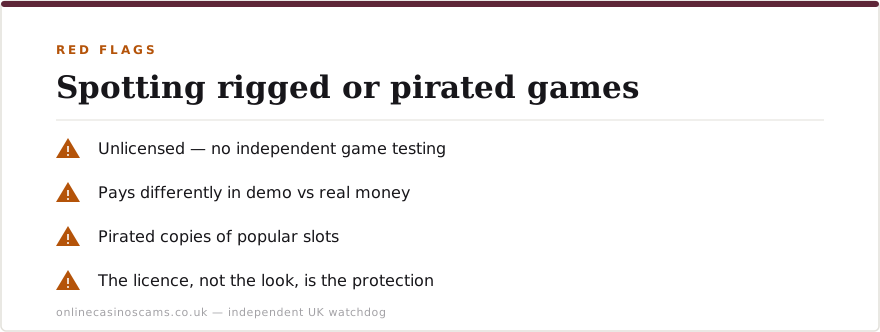
Unlicensed sites face none of that. There is no testing requirement because there is no regulator to impose one. Nobody has examined the game, nobody is checking that the version on the screen matches the version the studio published, and there is no licence to lose. That is the structural difference, and it is the whole story: rigged games don’t live at licensed casinos because the licence makes them too expensive to run. They live where there is no licence — on the unlicensed sites our register documents and the closed-brand domains that quietly change hands.
If you only remember one thing from this page, make it this: the question is never “does this slot look fair?” It’s “who, if anyone, was required to check?” On a licensed site the answer is a testing lab. On an unlicensed site the answer is nobody. For the broader argument about whether the regulated market itself is rigged, the safety guides handle that question directly — this page is about the sites where the games can be tampered with in a literal sense.