ONLINE CASINO SCAMS The Independent UK Watchdog
The Fine Print

Casino bonus traps and impossible wagering requirements

A casino bonus trap is the rare scam where everything is technically true. The bonus is real, the money lands in your account, the offer is exactly as advertised — and the terms are written so that converting any of it to withdrawable cash is, in practice, almost impossible. This guide works the wagering arithmetic through with numbers you can check, names the five clauses that quietly void winnings, and shows you the three figures to read before you ever click “claim”.

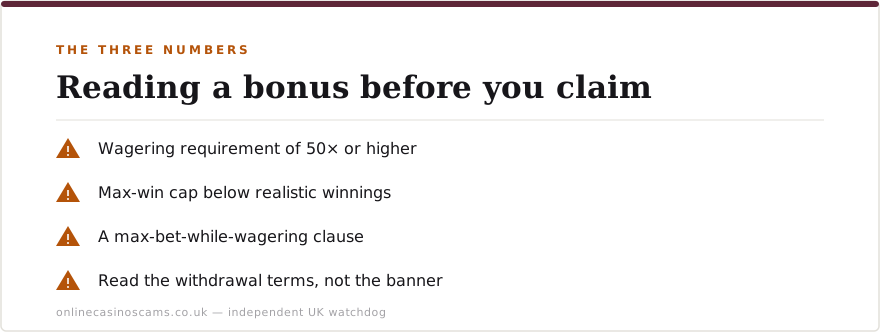
Reading a bonus before you claim: Wagering requirement of 50× or higher; Max-win cap below realistic winnings; A max-bet-while-wagering clause; Read the withdrawal terms, not the banner.
Section 01 / The Definition

The bonus trap, defined

A bonus trap is a genuine bonus whose terms make conversion to cash practically impossible. Note what that isn’t: it isn’t a fake offer or a non-existent casino. The credit really appears. You really can play with it. The trap lives entirely in the conditions attached — the playthrough you must complete, the caps on what you can keep, the clauses that void everything if you step wrong.

That’s what makes it effective. There’s nothing to “catch” in the headline, because the headline is honest: “100% up to £100”, “50 free spins”, “£200 welcome package”. The bait is the number you see; the trap is the page of terms you don’t read. By the time the terms matter — at withdrawal — the deposit has long since been made, which was the point.

Crucially, a bonus trap is not always a question of dishonesty. The terms are usually disclosed somewhere. The trap is the gap between how an offer is marketed and how it actually works — and that gap is wide enough that even players who read carefully can be caught.

Section 02 / The Wagering Maths

Wagering requirements, worked through

The wagering requirement (or “playthrough”) is the engine of most bonus traps. It’s the total amount you must stake — not lose, stake — before any bonus money or winnings from it can be withdrawn. It’s written as a multiple of the bonus, sometimes of the bonus plus deposit. The multiple is everything, and the arithmetic is simple:

Bonus Wagering multiple Total you must stake
£10035x£3,500
£10050x£5,000
£10060x£6,000

Read that as it really lands. To unlock a £100 bonus at 35x, you must place £3,500 of bets. At 60x, £6,000 — sixty times the bonus, in turnover, before a penny becomes yours to take. That’s not £6,000 you lose; it’s £6,000 you cycle through the games, while the house edge takes its cut of every pound on the way round.

And that is why 50x and above is, for a normal bankroll, effectively uncashable. Every bet you place to chip away at the requirement is itself subject to the house edge, so your balance is being ground down the whole time you’re trying to clear it. Long before you reach the turnover target, ordinary variance — the natural swing of wins and losses — tends to burn through the balance, and the bonus expires with nothing to withdraw. The higher the multiple, the more turnover required, the more chances for the balance to hit zero first. You don’t have to “lose” deliberately; the structure does it for you.

Section 03 / The Five Clauses

The five fine-print traps

Wagering is the headline trap, but four more clauses do quiet damage — and several can void winnings retroactively, after you thought you’d done everything right.

  • Max-win caps. A limit on how much you can ever withdraw from a bonus, regardless of what you win. Hit a big win clearing the wagering and the cap claws it back to a token figure — often a small multiple of the bonus. The upside is capped; the grind to reach it isn’t.
  • Max-bet-while-wagering clauses. A ceiling on the stake size you’re allowed to place while the wagering is still active. Place a single bet over that ceiling — even by accident — and the breach can void the bonus and all winnings from it. This is one of the most common ways players lose a balance they’d legitimately built.
  • Game weighting. Not every game counts equally toward the wagering. Slots usually count 100%; table games such as blackjack and roulette often count only 10–20%, or 0%. If table-game play barely counts, the requirement is far harder to clear than the headline multiple suggests — and players who don’t check the weighting quietly fall behind.
  • Expiry windows. A deadline — often days — by which the entire wagering must be completed or the bonus and its winnings are forfeited. A tight window combined with a high multiple is a deliberately impossible combination.
  • Withdrawal-voids-bonus clauses. Make a withdrawal of your own deposited funds before the wagering is complete, and the bonus plus any associated winnings are cancelled. The clause turns an ordinary act — taking out your own money — into a forfeiture.

The unifying theme: most of these can be triggered without you doing anything obviously wrong, and several remove winnings you’d already “earned”.

Section 04 / Not Just Rogue Sites

Licensed brands play this game too

It would be convenient if bonus traps were confined to unlicensed casinos. They aren’t. The clauses above are legal terms, and they appear at UKGC-licensed operators as well — which is exactly why this site tracks bonus-complaint patterns even at licensed brands.

Take a documented example. Prime Casino is, per our register, UKGC-licensed (licence 39483, active). It also carries a recurring bonus-complaint pattern: as the register’s review record shows, recurring themes include non-withdrawable bonus winnings, bonus restrictions applied after deposit, and 60x wagering paired with max-bet traps. Its operator, AG Communications Limited, paid a £1,407,834 settlement in February 2025 over regulatory failures, per the Gambling Commission’s enforcement record cited in our entry. None of that means the brand “scams” players in a criminal sense — it is licensed, and a licence gives you real recourse. It means the bonus-trap mechanics described on this page are documented in the wild at a regulated operator, not just at rogue sites.

The wider point: a licence guarantees recourse, not good behaviour around bonuses. Our register tracks where the complaint patterns cluster so you can weigh an offer with eyes open.

Section 05 / The Fast Read

How to read a bonus in two minutes

You don’t need to read the whole terms page to judge a bonus. You need three numbers and one habit. Before depositing, find these in the terms:

  • The wagering multiple. Search the terms for “wagering” or “playthrough”. Anything from 50x upward is, for a normal bankroll, effectively uncashable — and tells you the offer is built to be hard to convert, not generous.
  • The max-win cap. Search for “maximum withdrawal” or “max win”. If your realistic winnings could exceed the cap, the upside is an illusion before you start.
  • The max-bet-while-wagering limit. Search for “maximum bet” or “max stake”. This is the clause most likely to void winnings by accident — know it before you place a single bet.

The habit: read the withdrawal section, not the offer banner. The banner is marketing; the withdrawal terms are where the trap is written. Two minutes spent there tells you more about a bonus than the headline number ever will. If any of the three figures is missing, hidden or evasive, that absence is itself the answer.

Section 06 / Trapped Already?

Trapped already?

If a bonus has voided your winnings or your withdrawal has been refused on bonus grounds, your route depends on whether the operator is licensed.

  • For a UKGC-licensed brand, follow the complaints ladder. Complain to the operator in writing first, then escalate to its named ADR (alternative dispute resolution) scheme if the response is unsatisfactory, then the regulator. Order matters. The complaints and ADR guide walks through each stage.
  • Check the brand’s record on the register. A documented complaint pattern strengthens your case and tells you what you’re dealing with. Look the operator up on the blacklist before and during a dispute.
  • For an unlicensed site, there’s no ADR route — which is the strongest argument for checking the licence before depositing. Report it to Action Fraud and the Gambling Commission, and treat any lost deposit as a recovery question rather than a bonus dispute.

And as always: anyone who contacts you offering to recover bonus winnings for an upfront fee is running the second scam, not solving the first.

Section 07 / Questions

Frequently asked questions

What bonus traps are, how wagering requirements work, and how to read an offer before depositing.

What is a bonus trap?

A bonus trap is a genuine casino bonus whose terms make converting it to withdrawable cash practically impossible. The offer is real and the money appears, but high wagering, win caps, game weighting and voiding clauses mean the balance rarely survives long enough to be cashed out.

What is a wagering requirement?

It’s the total amount you must stake — not lose, stake — before bonus money or winnings from it can be withdrawn, expressed as a multiple of the bonus. At 35x a £100 bonus needs £3,500 staked; at 60x it needs £6,000. The house edge applies to every pound of that turnover.

What is a realistic wagering requirement?

Lower is better, and below roughly 35x is more achievable. From about 50x upward a bonus is effectively uncashable for a normal bankroll, because ordinary variance tends to burn through the balance before the turnover target is reached. The multiple is the single most important number in any bonus.

Can a casino void my winnings over a bonus?

Yes — terms permitting. The most common trigger is a max-bet-while-wagering clause: a single bet over the allowed stake while wagering is active can void the bonus and all winnings from it. Game-restriction and withdrawal clauses can also void a balance, sometimes retroactively. The clauses are usually disclosed in the terms.

Why did my withdrawal cancel my bonus?

Many bonuses carry a withdrawal-voids-bonus clause: taking out your own deposited funds before the wagering is complete cancels the bonus and any winnings tied to it. The act of withdrawing is treated as opting out, so the bonus balance is forfeited. Check this clause before making any withdrawal while a bonus is active.

Are no-deposit bonuses a scam?

Not inherently, but they’re usually the most heavily restricted offers on a site — high wagering, low max-win caps and tight expiry windows are the norm, because the casino is giving you something for nothing. Read the same three numbers you’d read on any bonus; the “free” part rarely converts to much cash.

Do licensed casinos use bonus traps?

Yes. The clauses are legal terms and appear at UKGC-licensed operators too. Per our register, Prime Casino is licensed yet carries a documented bonus-complaint pattern including non-withdrawable bonus winnings and 60x-plus wagering with max-bet traps. A licence gives you recourse through ADR; it doesn’t prevent restrictive bonus terms.

Should I always refuse the bonus?

Often it’s the rational choice. Declining a bonus keeps your deposited funds free of wagering requirements and voiding clauses, so you can withdraw whenever you like. If you only want flexibility and clean withdrawals, no bonus is frequently better than a bonus — the offer is only worth it if the terms genuinely suit how you play.

What is game weighting?

Game weighting is how much each game contributes to clearing a wagering requirement. Slots typically count 100%, while table games such as blackjack and roulette often count only 10–20%, or 0%. If you play low-weighted games, the requirement is far harder to clear than the headline multiple implies.

How do I complain about unfair bonus terms?

For a UKGC-licensed brand, complain to the operator in writing first, then escalate to its named ADR scheme, then the regulator — in that order. Document everything and check the brand’s record on the register to support your case. For an unlicensed site there’s no ADR route; report it to Action Fraud and the Gambling Commission.

Section 08 / Keep Reading

Related reading

Read the withdrawal terms before you claim the bonus.

Three numbers decide whether a bonus is generous or a trap — the wagering multiple, the win cap and the max bet. Check the brand’s complaint record first, and know the complaints route if a balance gets voided.